

Blog 168 - Marine Musings - Cars that Fascinated Me - Part I
- ranganathanblog
- Nov 26, 2025
- 5 min read

This one is off the beaten track. Probably a few others similar ones are likely to follow.

It was in 1985 that I boarded my first Car Carrier and, thus, began a love for cars. Subsequently, I worked on a total of 8 Car Carriers. All of them could not be termed pure Car Carriers as such, as we carried large components that could not be containerised and were put on tractor trailers. Later years saw a mind boggling variety of cargo coming in and were accepted as long as they fitted into the stern opening. We even carried vanes of a wind turbine.
We carried Japanese and Chinese cars for discharge in the US and Europe. The unexplainable as the fact that we hardly carried many American cars to Europe.
And then, the beauties would be loaded - the top of the line cars - Lamboghinis, Ferraris, Bugattis, Astom Martins, Rolls Royces, Bentley’s etc, along with the cars of the day.
Many were antique, bought by a collector in Dubai or Singapore or Hong Kong.
The high end cars would, invariably, be for Dubai, Abu Dhabi, Singapore and Hong Kong.
The run-of-the-mill cars would be packed line sardines, with hardly a 2 inch sspace between each. Whereas the costlier ones would have several slots to themselves.
There used to be several ports that did not have sufficient drivers and we - a few of the ship’s crew - would pitch in and drive the cars out to the parking lot a few miles away.
Dreamy exhilaration.
To be able to sit in the driver’s seat of the cars that I can only dream about, examinee the controls, slowly reverse her and - at a sedat pace - drive along each deck, take the ramps up-or-down to the 7th Deck and then slowly ease her past the stern ramp and then - leet her rip.
To be able to drive down empty piers in the 5th gear - an unknown gear to the average Indian - and the speed achieved - remain the joys of life.
I couldn't ever afford them, but at least I can eulogise them.
As I said, my love for cars started then.
Most of the photographs of the cars are taken from Facebook. This first offering is of European cars till the 1970s. American cars to follow in a subsequent blog.
One can see that, when tracing the history of automobiles, the First and Second World Wars had a lot to do with the wealth and prosperity of nations, the Second World War more than the First.
To elaborate, the 1920s had a few cars manufactured and, as wealth grew, the 1930s saw luxury cars being bought along with the more pedestrian.
The 1940s drained the wealth of almost all nations and, consequently, fewer cars were produced. The 1950s saw a return to luxury cars in both Western continents.
By contrast, the 1950s and 1960s were one of poverty and hunger across Asia and Africa, being ravaged by the brutalities of colonisation.
The really old ones
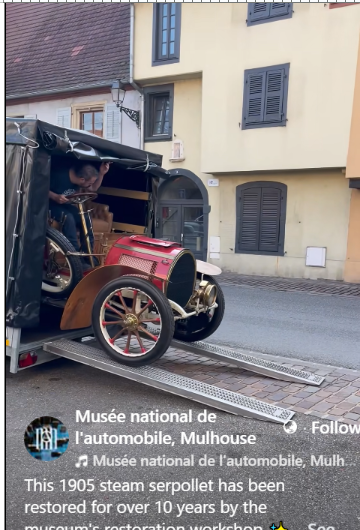


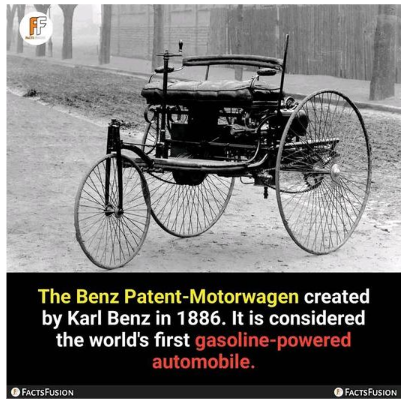
The Gasoline Powered Oldies

Talbot cars were originally manufactured in Suresnes, France till they were licensed out to England and Finland.
1920s? - Post World War 1
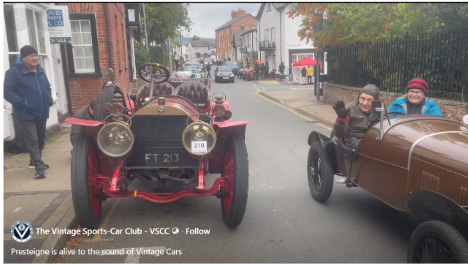


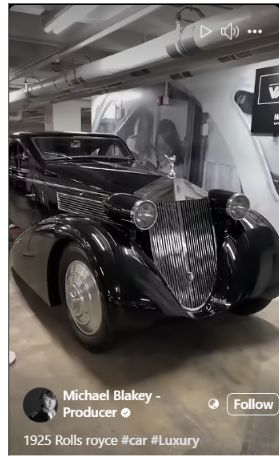
Rolls-Royces over the years




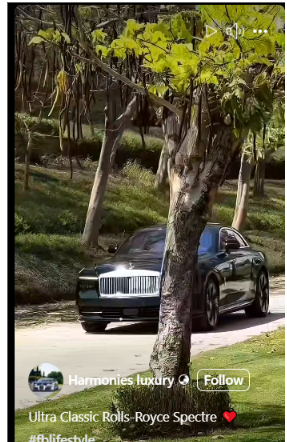


1930s

Bentley Motors - a British Company

Alfa Romeo - an Italian luxury car manufacturer

Gasoline was strictly rationed during WW2, and in June, engineers in Norwegian company Frydenboe began designing a carbide generator.
Already in August, the company received government approval, and the new product was named Frydenbø carbide generator. Among the townspeople, it was often referred to as the knob car or the wood-burning car!
The generator was sold by Ford just outside Oslo, which had sub-agents throughout the country.
Wood stoves on wheels was a huge success.
How it worked:
Wood, often in the form of small pieces of wood called knots, was burned in the generator.
The resulting gas, wood gas, was purified and fed to the car's engine as fuel.
The generator was often mounted in the back of the car due to its size and space requirements.


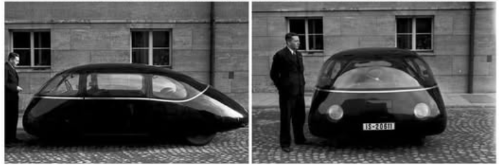
1940s


1950s


The Brutsch Mopetta is an outlandish vehicle that never became widespread. A total of 14 units were produced, and according to some sources, only five have survived to this day.
The German microcar is in demand due to its unique design. It was developed by Egon Brütsch in the mid-1950s. The German engineer made a fiberglass body kit, a steel frame, a small windshield, and a motorcycle-style steering wheel with all the levers (brake, clutch). The design of the Brutsch Mopetta is most likely inspired by the EMD E8 locomotive.
Brutsch Mopetta characteristics:
— engine: ILO-Motorenwerke
— type: two-stroke
— cooling: air
— working volume: 50 cm3
— gearbox: 3 speeds
— maximum speed: 35 km/h
— fuel consumption: 2.5 liters per 100 km
— weight: 89 kg
Egon Brutsch actively negotiated with Opel to establish mass production of the Brutsch Mopetta, but nothing worked out - production was stopped in 1958.
Rare in those days, but similar ones are entering the market with - mainly - Chinese made three wheelers.


1960s

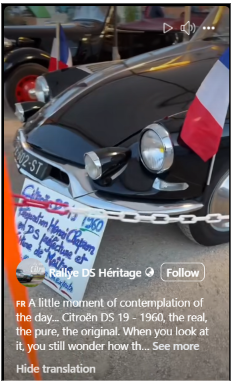


1962 Austin Healy Mk II

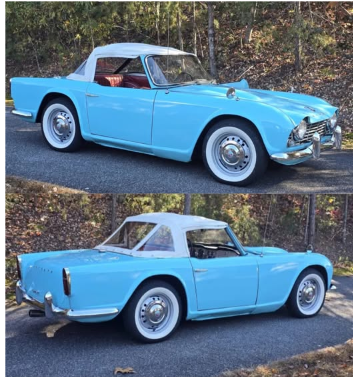
1970s Indian manufactured ‘Herald’ is of similar design from Standard Motors, Madras


AR


Comments